Quick answer
How do you register a company in Nepal?
A company must register with the Office of Company Registrar before it starts operating, then complete tax registration and obtain any licence required for its sector. The documents and government fees depend on the company type, capital, shareholders and any foreign investment.
- Choose the company structure and proposed name before preparing the filing.
- Prepare the constitutional, shareholder, identity and representative documents for the chosen structure.
- Confirm sector approvals, tax registration and continuing filing duties before operations begin.
Company registration questions
Can a company be registered online in Nepal?
Yes. The Office of Company Registrar provides company-registration services through CAMIS. The founders still need complete constitutional, identity and approval documents, and the Registrar may request corrections or verification.
Are registration fees the same for every company?
No. The official charge depends on the company type and authorised capital. Other costs may arise from sector approvals, foreign investment, local registration and document preparation.
Which company structure fits the proposed business?
The Office of Company Registrar registers private companies, public companies and companies that do not distribute profit. A foreign company may register a branch or contact office when it has the approvals required for its proposed activity. The founders, capital plan, investment source and purpose determine which structure and documents fit.
How do you register a company online in Nepal?
- Create an account in CAMIS. The Office of Company Registrar uses its online Company Administration Management Information System for registration services.
- Reserve the proposed name. Choose a name that meets the Registrar’s requirements and does not conflict with an existing company.
- Prepare the constitutional documents. Draft the memorandum and articles for the selected company type and record the founders, share structure, objectives and registered-office information.
- Submit the application and supporting records. Upload the application, identity records, constitutional documents and any approval required for the proposed activity or investment.
- Respond to the Registrar’s review. Correct or clarify the filing if the Office raises a query.
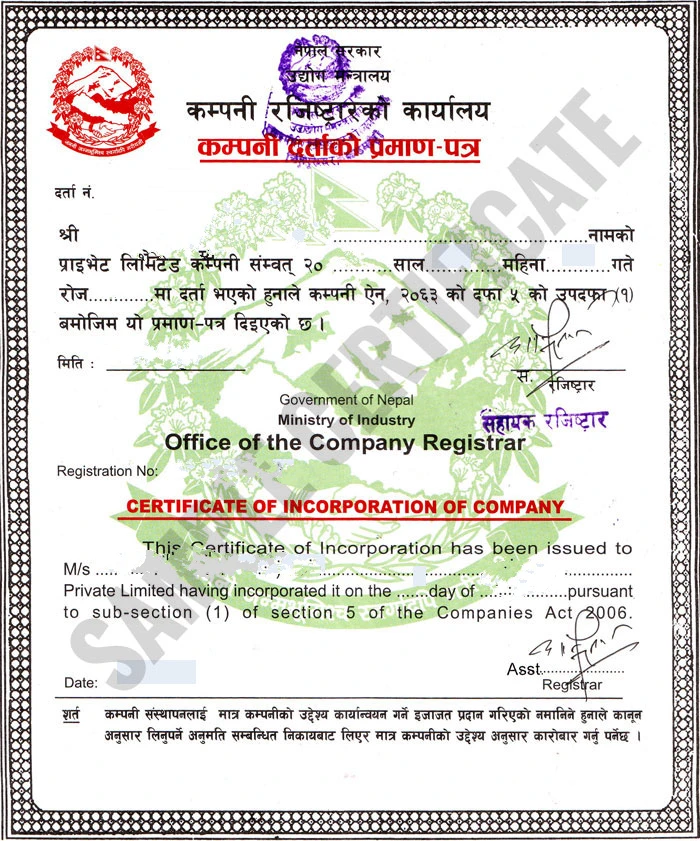
- Complete registration and the next registrations. After the company certificate is issued, complete PAN or VAT registration, local registration and any sector licence that applies before starting the regulated activity.
Which documents do Nepali founders usually need?
The Office of Company Registrar lists the application, the prescribed memorandum and articles, and certified citizenship copies of the founders among the core records. A private company must also submit a copy of any unanimous agreement between its shareholders. If a Nepalese company is a founder, the filing also requires its registration certificate, the board decision approving the investment and representative, and the representative’s citizenship record.
What changes when foreign investment is involved?
A foreign-investment company needs the approval issued by the responsible investment authority. The filing may also require the foreign founder’s passport or corporate registration documents, the investing company’s decision, a representative nomination and a joint-venture agreement. Foreign-language records may need authentication and a Nepalese translation.
How much does company registration cost?
The government registration charge depends on the company type and authorised capital. The Office of Company Registrar publishes the current fee schedule. Sector approvals, foreign-investment work, document preparation, local registration and professional advice can add separate costs. Check the current official schedule before setting a budget because fiscal legislation may change charges or provide temporary relief.
How long does registration take?
There is no reliable fixed completion time for every company. Timing depends on name approval, the accuracy of the documents, the Registrar’s review and any prior sector or foreign-investment approval. A complete filing can move faster than one that requires corrections or additional consent.
What must the company do after registration?
- obtain PAN and VAT registration where applicable;
- obtain the licence or approval required for any regulated activity;
- maintain shareholder, director, meeting and accounting records;
- file annual and event-based returns within the applicable deadlines; and
- update the Registrar when the company changes its capital, address, directors, ownership or constitutional documents.
S & S Jurists can review the proposed ownership and activity, prepare the filing documents and identify the approvals the company needs before operations begin.
Official legal sources
Check the current text and guidance published by the responsible government body.