
With the rapid growth of digital technology, e-commerce has transformed how people buy, sell, and deliver goods and services. In Nepal, the Electronic Commerce (E-Commerce) Act, 2081, provides a dedicated legal framework for regulating online business activities, ensuring consumer protection, and fostering transparency and accountability in the digital marketplace.
Understanding E-Commerce
E-commerce, short for electronic commerce, refers to all types of economic and commercial activities carried out through digital platforms without any physical interaction between buyers and sellers. This includes the buying, selling, delivery, and distribution of goods and services through websites, mobile applications, or any other electronic systems.
According to the Electronic Commerce (E-Commerce) Act, 2081:
“Electronic commerce (e-commerce) means the process of buying or selling goods or services through electronic platforms. However, using electronic platforms solely for providing information about goods or services does not constitute conducting electronic commerce.” (Sec. 2(l))
In essence, just advertising or displaying products online doesn’t amount to e-commerce. For an activity to qualify, there must be a transaction, such as an order placement, payment, or delivery conducted electronically.
Governing Law and Authority
- Governing Law: Electronic Commerce (E-Commerce) Act, 2081
- Regulatory Authority: Department of Commerce, Supplies, and Consumer Protection (DoCSCP)
The Department of Commerce, Supplies, and Consumer Protection (DoCSCP) is the principal regulatory authority overseeing registration, compliance monitoring, and enforcement of e-commerce businesses in Nepal.
Procedure for E-Commerce Registration in Nepal
Every business intending to operate in the e-commerce sector must be officially registered under the Electronic Commerce (E-Commerce) Act, 2081. The registration process is mandatory to ensure that businesses function lawfully and transparently.
The process involves four main steps:
Step 1: Registration of the Business Entity
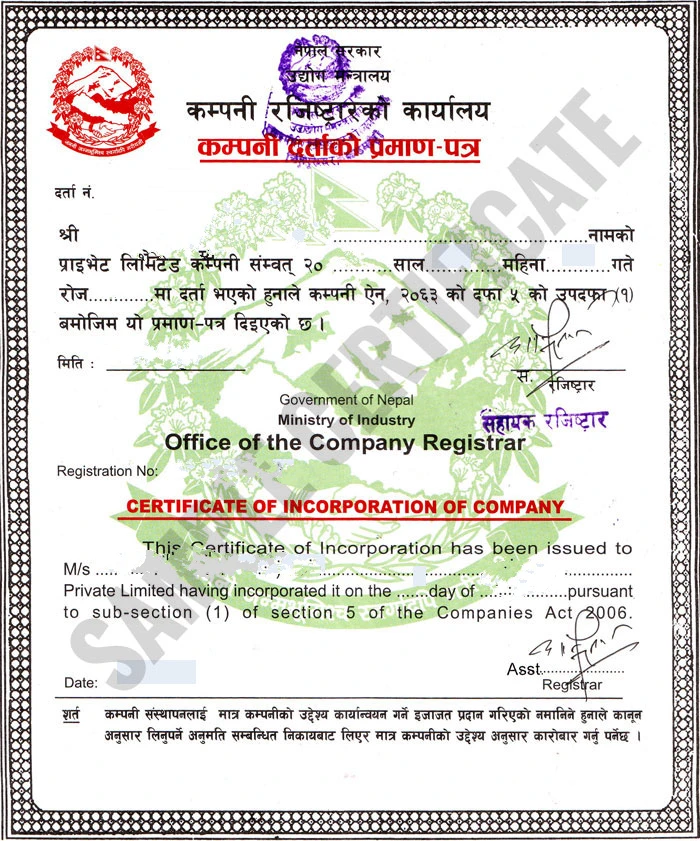
According to Section 3 of the Act, any entity intending to operate an e-commerce platform must first register its business. This can be done as one of the following legal entities:
- Sole Proprietorship
- Partnership
- Private Limited Company
The registration must be completed with either the Office of the Company Registrar or the Department of Commerce, depending on the nature of the business. This ensures the business has legal recognition before engaging in e-commerce activities.
Step 2: Establish an Electronic Platform
Once registered, the business must establish its electronic platform, such as a website or a mobile application, through which online transactions will occur.
As per Section 4 of the Act:
- All e-commerce businesses, except for micro and cottage enterprises, must develop their own digital platforms.
- Micro and cottage industries may use third-party platforms (like Facebook, Instagram, or other online marketplaces) instead of creating their own.
This provision encourages small businesses to participate in e-commerce without the burden of developing costly digital infrastructure.
Step 3: Submission of Application to the E-Commerce Portal
Once the platform is ready, the business must apply for registration through the official E-Commerce Registration Portal managed by the Department of Commerce, Supplies, and Consumer Protection.
The application must include business registration details, ownership information, platform details, product or service descriptions, and contact details. All documents must be accurate and complete to facilitate review.
Step 4: Review and Issuance of Platform Listing Number
Within seven days of receiving the complete application, the Department reviews the details and issues a Platform Listing Number electronically.
This serves as official proof of registration and must be visibly displayed on the e-commerce platform’s homepage or other visible sections.
Documents and Information Required for E-Commerce Registration
Under Section 6 of the Electronic Commerce (E-Commerce) Act, 2081, businesses must submit detailed documentation and data for registration. These requirements are divided into two categories:
A. Business Information
- Business name and address,
- Registration certificate number,
- Proprietor/partner/company representative details,
- Nature of business activities,
- Permanent Account Number (PAN) or VAT number,
- Contact details (telephone, email, website),
- Number and location of physical outlets,
- Any additional details required by the Department.
B. Product and Service Details
- Product/service name, type, nature, and specifications (design, shape, image, weight, etc.),
- Minimum sale price (inclusive of taxes),
- Any additional transfer or delivery charges,
- Instructions for use,
- Delivery method and timeframe,
- Payment options and refund policies,
- Warranty and guarantee terms,
- Manufacturer or supplier information,
- Records of imported goods (if applicable),
- After-sales service obligations,
- Return and cancellation terms,
- Compliance with consumer rights and product quality standards,
- Complaint handling and dispute resolution mechanisms.
Outcome of Registration
After successful registration, the e-commerce business is officially listed on the Government’s Electronic Commerce Portal. This listing validates the business’s legitimacy and enables consumers to verify its authenticity before making purchases.
Importance of E-Commerce Registration
Registering an e-commerce business is more than a legal formality it is essential for establishing trust and credibility in the market. The key benefits include:
- Legal Authorization: Only registered businesses can legally operate online in Nepal.
- Consumer Confidence: Registration promotes reliability and enhances buyer trust.
- Transparency: Ensures ethical trade practices and minimizes fraudulent activities.
- Compliance: Prevents penalties and business disruptions.
- Accountability: Enables effective monitoring and consumer protection enforcement.
Conclusion
The Electronic Commerce (E-Commerce) Act, 2081 provides a strong legal foundation for the operation of online businesses in Nepal. Through mandatory registration, clear documentation, and regulatory oversight, the Act ensures that digital trade remains fair, secure, and consumer-friendly. Complying with these registration procedures helps businesses gain legitimacy while contributing to Nepal’s growing digital economy.