
When an organization conducts a labour audit, it’s essentially taking a close look at how it treats its employees. This involves reviewing important documents like employment contracts, payroll records, and safety measures to make sure everything is fair and follows the law. The goal is to ensure that the company is doing right by its employees and providing them with the protections and benefits they deserve.
Each enterprise is required to conduct a labour audit to verify whether its actions and practices comply with the Labour Act, Regulations, and other applicable laws, and to prepare a corresponding report. This report must be submitted to the relevant Office or inspector during inspections conducted or whenever requested by the Office or inspector.
Laws Governing Labour Audit
Labour audit in Nepal is regulated by the Labour Act 2017, the Labour Regulations 2017, and the Labour Audit Standards 2018. These legal frameworks collectively establish the requirements and procedures for conducting labour audits, ensuring enterprises comply with labour laws and maintain fair employment practices.
Necessity of Labour Audit
The provision for labour audits was introduced to enforce existing labour laws with the objective of:
- To enhance the level of compliance with labor-related policy and legal provisions,
- To reduce workers’ complaints and increase their sense of belonging towards the organization,
- To lessen the burden of government monitoring, regulation, and inspection,
- To make the organization itself responsible and accountable for implementing policy and legal measures.
Timeline for Submission of Labour Audit
Each enterprise must conduct a labour audit by the end of the month of Poush (mid-January) every year to verify whether its operations comply with the Labour Act and related regulations.
Eligible Individuals or Entities Authorized to Conduct Labour Audits
The following individuals or entities are authorized to conduct labour audits as per the standards set by the Ministry of Labour, Employment and Social Security:
- Managerial-level employee within the enterprise
- Qualified individual associated with the labour sector
- Qualified institution associated with the labour sector
Qualifications for Individuals:
(a) Must be a Nepali citizen,
(b) Must have at least completed a bachelor’s degree,
(c) Must have a minimum of two years of experience in managerial work within an industrial establishment.
Qualifications for Institutions:
(a) Must be legally registered,
(b) The institution’s objectives and area of work must be related to labour matters,
(c) If the institution appoints any individual as an auditor, that person must meet the qualification requirements specified above.
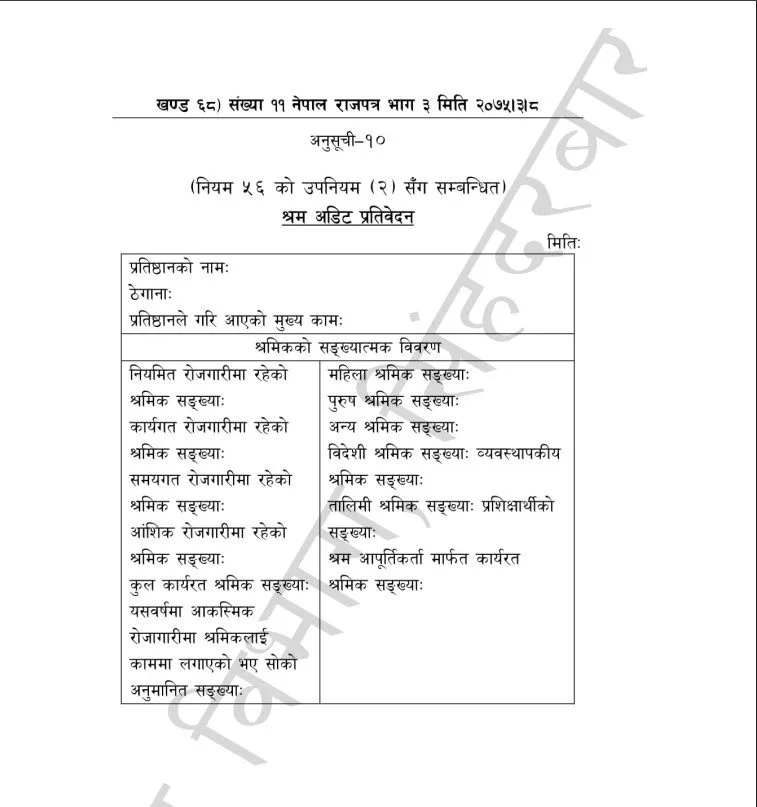
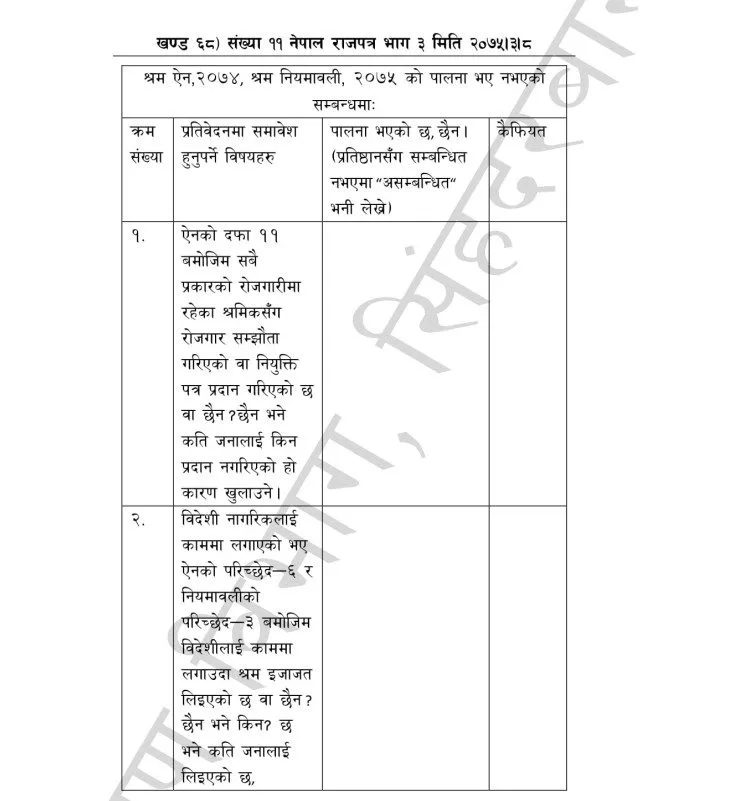
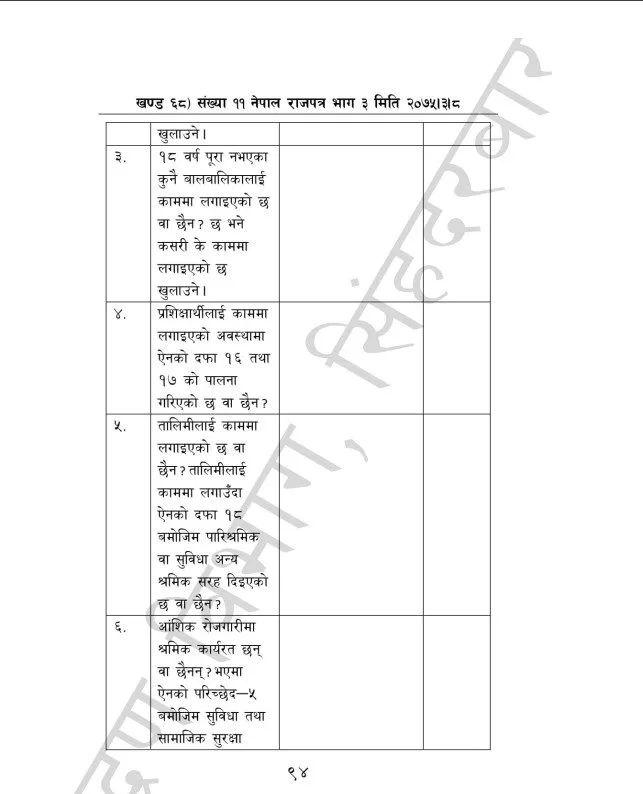
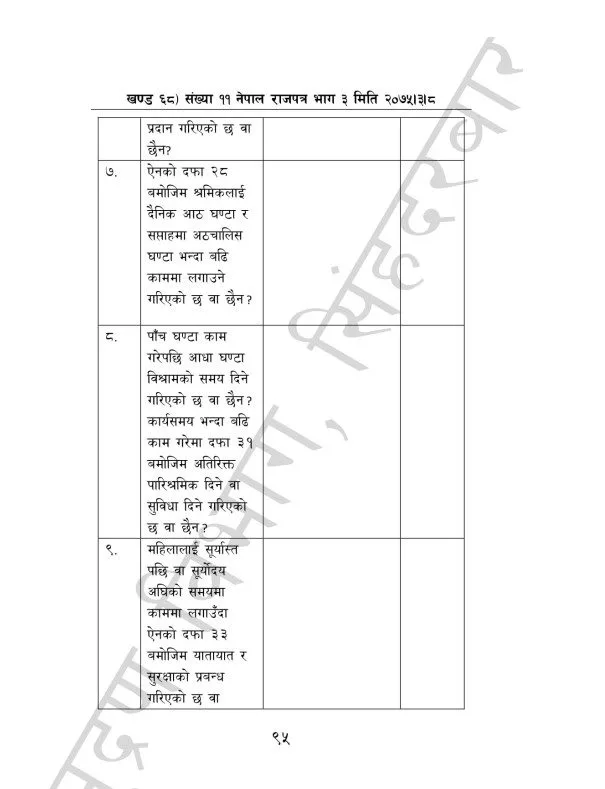
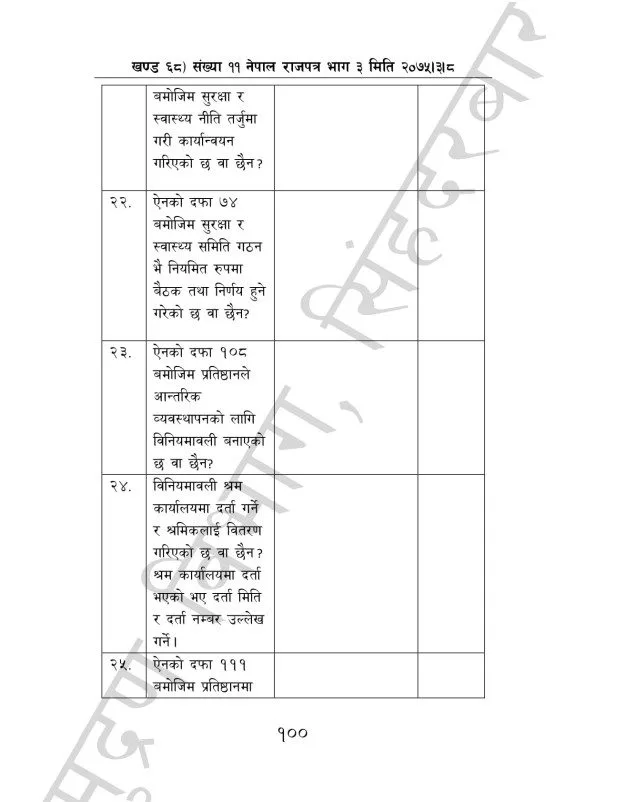
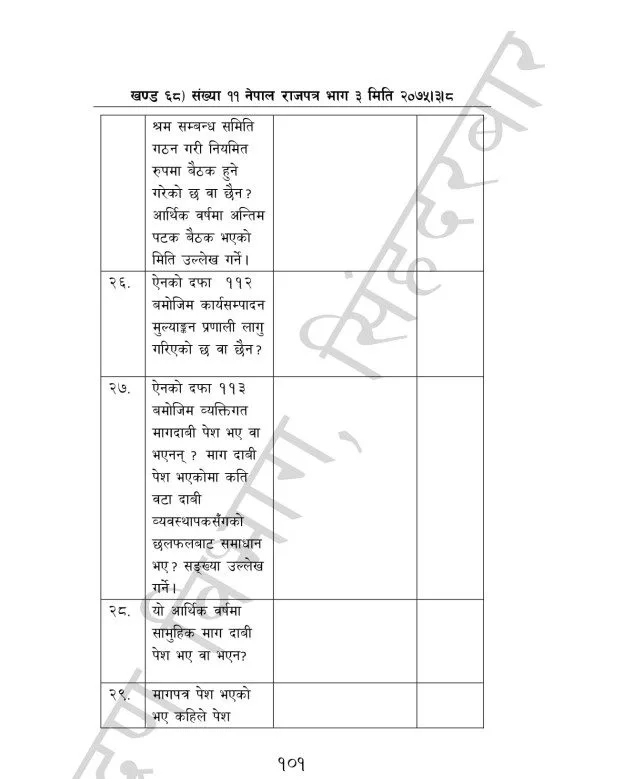
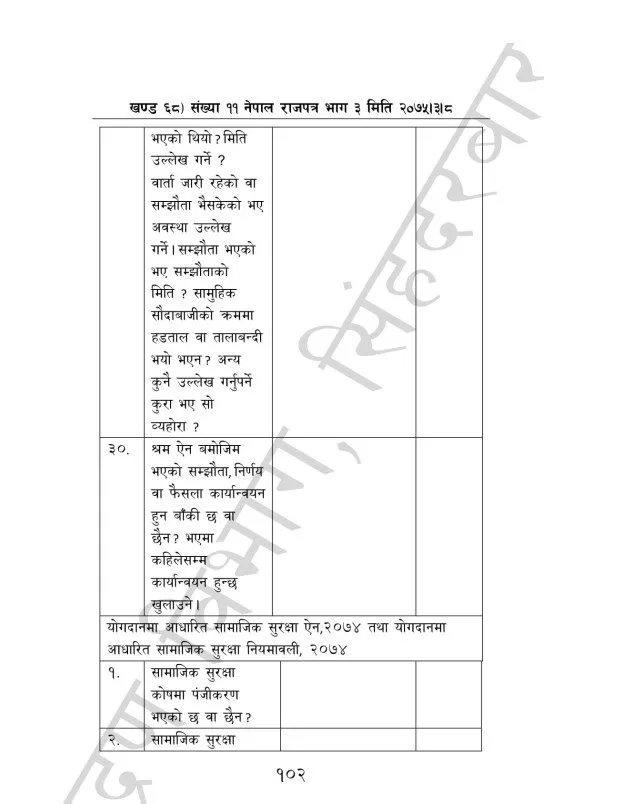
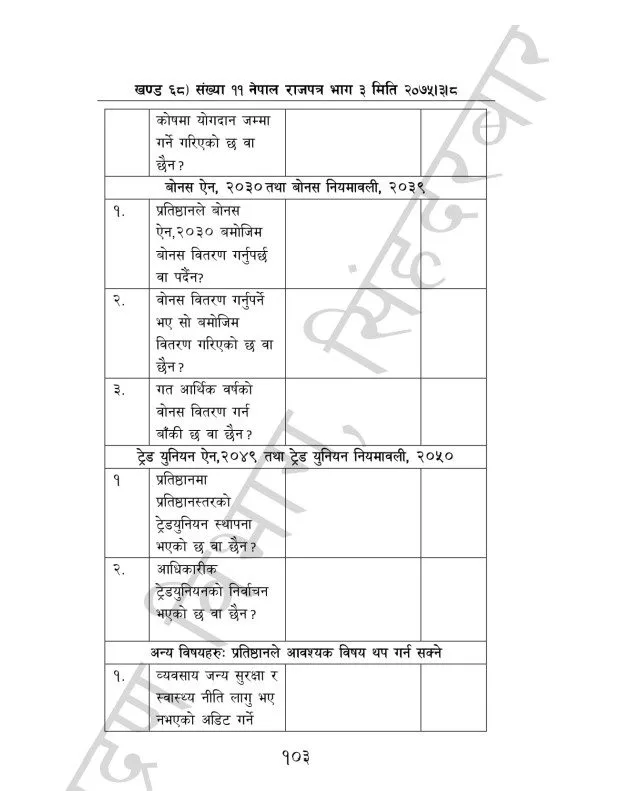
Format for Labour Audit
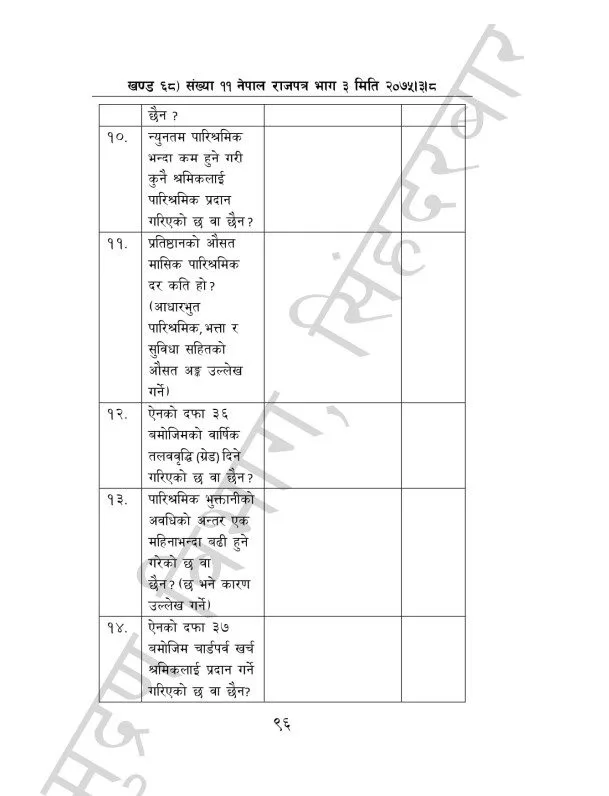
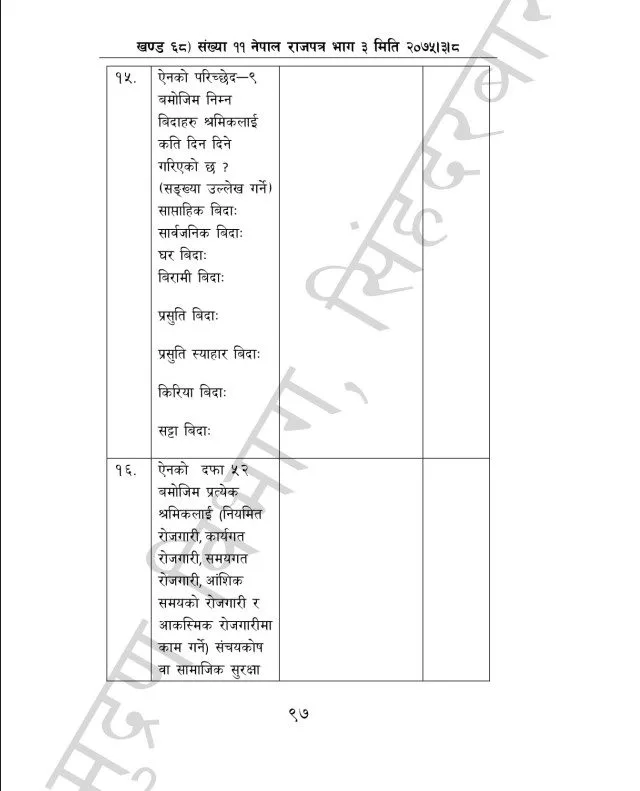
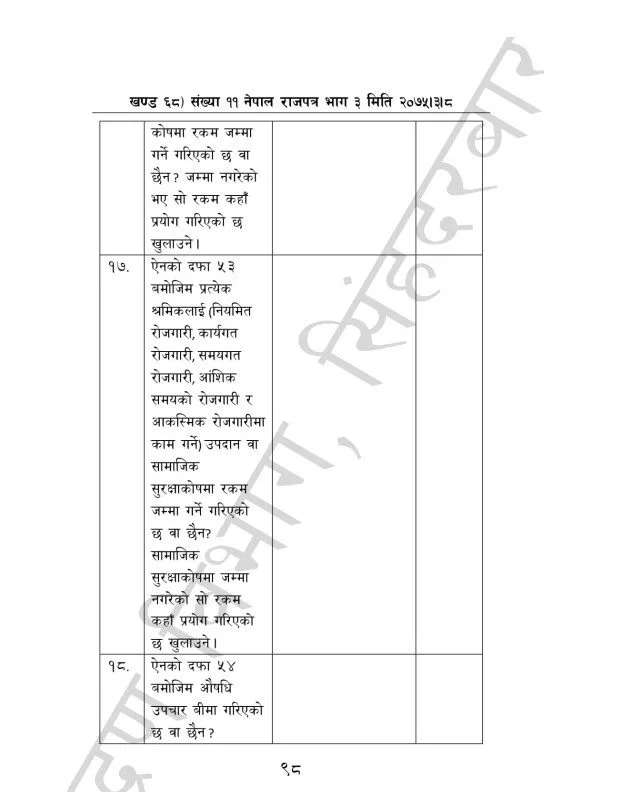
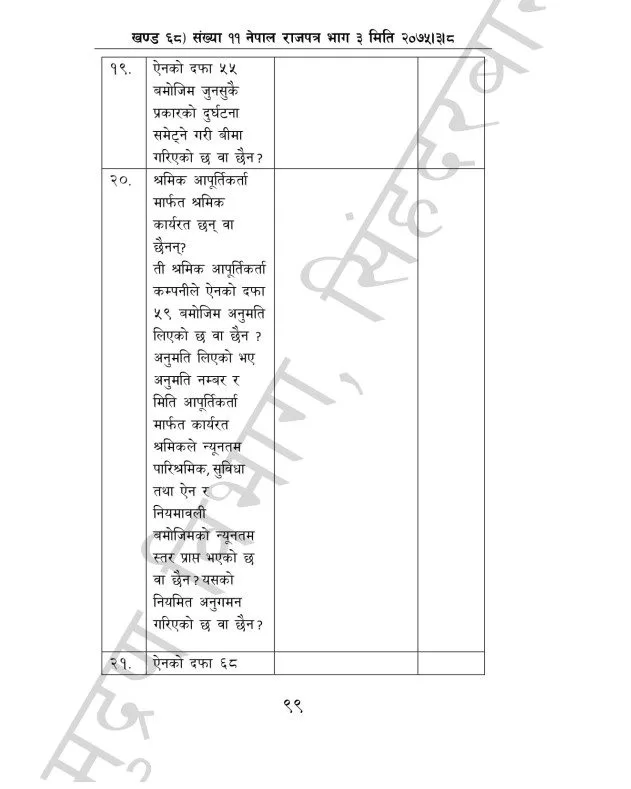
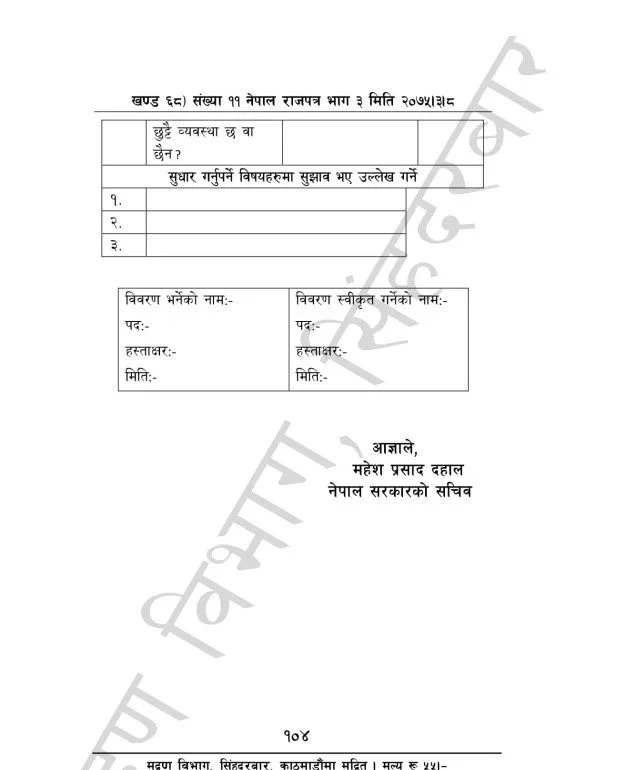
The Labour Audit report must be prepared following the format specified in Schedule 10 of the Labour Regulation, 2075.
Entities to Which Labour Audit Reports Must Be Submitted
Copies of the labour audit report must also be submitted to the Labour and Employment Office, Labour Relations Committee, Labour Inspector and the concerned regulatory authority of the enterprise as follows:
- Banks and financial institutions must submit to Nepal Rastra Bank,
- Insurance companies must submit to the Insurance Board,
- Non-governmental organizations must submit to the respective District Administration Office,
- Other enterprises must submit to the authority that granted their establishment or operational license.
Duties of Enterprise
Each establishment bears the primary responsibility to conduct a labor audit within the prescribed timeframe and submit the audit report to the designated authority as required by law. In addition, while conducting the audit, establishments must fulfill the following duties:
- Provide the auditor with accurate and complete information regarding the actual status of work carried out by the establishment.
- Ensure that the auditor receives the agreed remuneration and any other necessary service facilities.
- Offer any other support required by the auditor to facilitate the audit process.
- Submit one copy each of the labor audit report to the relevant Labor and Employment Office, the Labor Relations Committee, and the regulatory body overseeing the establishment.
Duties of Auditor
(a) The auditor must prepare a report based on the actual conditions of the work carried out by the establishment and submit it to the establishment.
(b) The auditor must perform their duties within the prescribed timeframe, without being influenced or pressured by anyone, and without succumbing to greed or temptation.
(c) During the audit, any information related to the establishment that comes to the auditor’s knowledge shall not be disclosed to any party except as permitted by law.
The format provided in Schedule 10 of the Labor Rules: