
Quick answer
What does Nepal Labour Act 2074 cover?
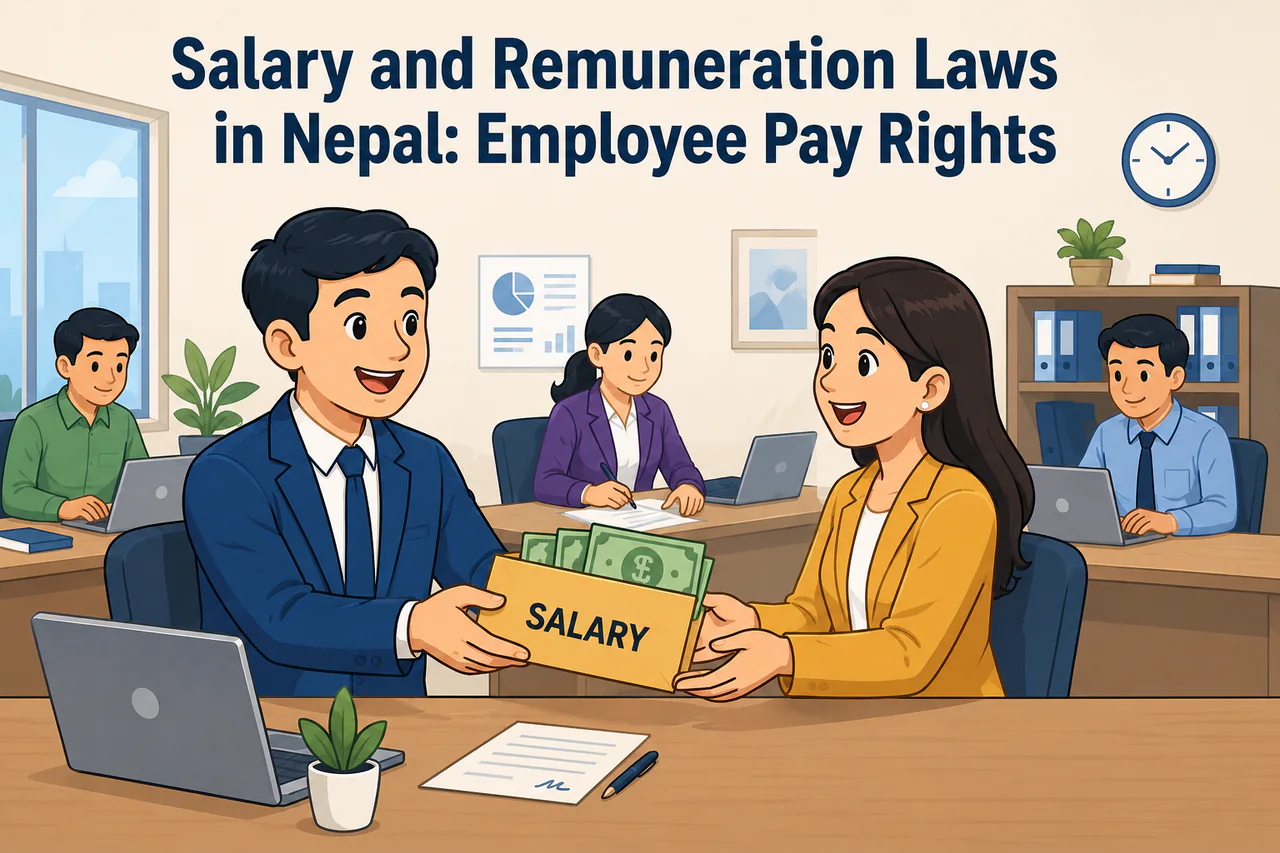
Nepal Labour Act 2074 sets rules for employment agreements, probation, working hours, overtime, pay, leave, discipline, termination, retrenchment and labour disputes. Section 57 addresses overlap with the Social Security Fund: where the applicable SSF contribution provides benefits such as provident fund, gratuity and medical insurance, the Act does not require an additional contribution or insurance to the extent already covered.
- Workers should retain appointment letters, pay records, attendance records, leave approvals and notices.
- Employers should keep contracts, workplace policies, payroll, social-security and disciplinary records consistent.
- Check the latest government wage notice before relying on an older salary figure.
Labour Act 2074 questions
What does Section 57 of Labour Act 2074 mean?
Section 57 prevents duplicate contribution or insurance obligations. When an employer or worker contributes under the Social Security Fund law and qualifies for equivalent provident fund, gratuity or medical-insurance benefits, no additional contribution or insurance is required under that chapter to the extent of the existing coverage.
Where can you read Labour Act 2074 in Nepali or English?
The Nepal Law Commission publishes the official Nepali text and PDF. If you use an English translation, compare it with the current Nepali text and later amendments before relying on it, because an available translation may not contain every change.
Which workplaces and workers does Labour Act 2074 cover?
The Act provides the general employment framework for enterprises and workers in Nepal. It recognises regular, work-based, time-bound, casual and part-time employment. Special laws apply to some services and institutions, so the organisation and the worker's legal status should be checked before treating one rule as universal.
What should an employment agreement contain?
The agreement should identify the employment type, work, pay, benefits and other conditions that apply. Employers should keep appointment, attendance, payroll, leave, social-security and disciplinary records. Workers should keep their signed agreement, salary records, approved leave and any notice given or received.
What are the normal working-hour and overtime limits?
Section 28 limits ordinary work to eight hours a day and 48 hours a week. A worker must receive a half-hour break after five continuous hours, and that break counts within working time. Where overtime is permitted, Section 30 limits it to four hours a day and 24 hours a week. Section 31 requires overtime pay at one and a half times the worker's basic remuneration, subject to the statutory provisions for collective agreements and managerial workers.
How should employers and workers check minimum pay?
The minimum wage changes through government notices. Do not rely on an amount quoted in an older article, appointment letter or payroll template. Compare the pay structure with the Ministry's current minimum-remuneration notice and check whether a sector-specific rate applies. Our 2082 minimum-wage update explains the current notice.
What leave and employment benefits should be recorded?
The Act addresses weekly and public holidays, home leave, sick leave, maternity and paternity leave, mourning leave and other employment benefits. Entitlement can depend on the worker's service, employment terms and the applicable provision. The employer should record accrual, approval, payment and any lawful carry-forward instead of relying on an informal verbal arrangement.
How does the Social Security Fund affect employment benefits?
Section 57 prevents duplicate obligations to the extent an applicable Social Security Fund contribution already provides the equivalent provident-fund, gratuity or medical-insurance benefit. Employers and workers should reconcile payroll deductions and contributions with the SSF record. Read the related Social Security Act guide for the registration, contribution and benefit framework.
What happens when employment ends?
The legal route depends on the reason, including resignation, expiry of a time-bound or work-based agreement, performance, misconduct, health, retrenchment or closure. Notice, an opportunity to respond, supporting records and statutory payments can affect whether the termination is lawful.
How can an employment dispute proceed?
An individual dispute may begin with a written claim to the employer and proceed under the Act if the parties do not resolve it. Collective disputes follow a separate process involving the authorised bargaining representative. The correct forum and deadline depend on the decision, claim and remedy involved.
What should you bring to a labour-law consultation?
- the appointment letter, employment agreement and workplace policies;
- attendance, salary, overtime, leave and SSF records;
- warnings, explanations, performance reviews and termination notices;
- emails, messages and other dated communications; and
- a short timeline of the employment and the decision in dispute.
S & S Jurists can review these records, identify the applicable procedure and advise on the next step for an employment or workplace-compliance matter.
Official legal sources
Check the current text and guidance published by the responsible government body.